
Professional manufacturer of ATVs, go karts, UTV, motorcycles, and spare parts in China.

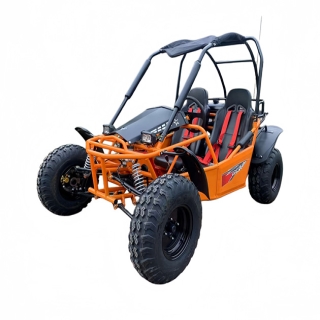
Go Kart
Whether you are looking to supply a commercial indoor rental venue, outfit an outdoor family entertainment center (FEC), or source private-label off-road buggies, Soar Moto offers custom OEM/ODM manufacturing and bulk fleet supply for go-karts.
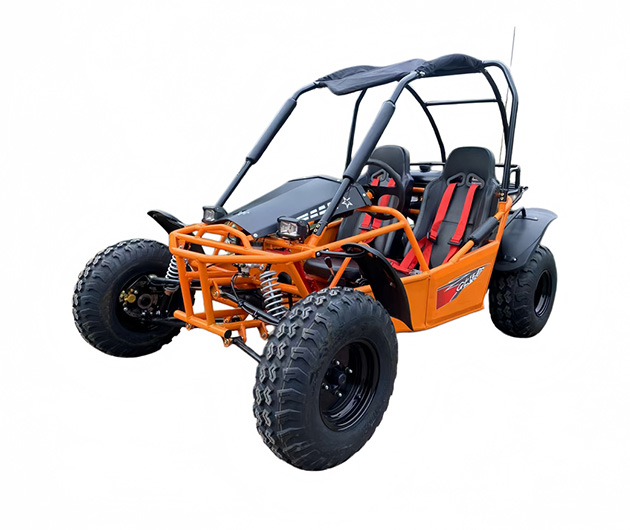
Soar Moto 160cc-270cc Go-Kart
The Soar Moto 160cc – 270cc Gasoline Go-Kart Series is engineered specifically for commercial track operators, amusement parks, and family entertainment centers (FECs).
Learn MoreWhat is Go-Kart?
A go-kart is a compact, four-wheeled open-frame vehicle engineered for commercial entertainment, rental track operations, or competitive motorsport racing. Characterized by a low center of gravity, responsive handling, and a rigid chassis, go-karts rely on calculated frame flex or specialized chassis tuning rather than complex multi-link suspension systems to maintain stability and traction.
Designed for high power-to-weight efficiency, modern go-karts range from heavy-duty commercial rental units to high-performance racing platforms capable of reaching extreme speeds and cornering g-forces.
Types of Go-Kart
Go-karts are categorized by their propulsion system, frame architecture, and intended operating environment.
Internal Combustion (Gasoline) Karts
Powered by 4-stroke commercial engines or 2-stroke race engines, gasoline go-karts remain a standard choice for outdoor tracks. They offer rapid refueling capabilities, long continuous operational cycles, and classic engine audio feedback favored in traditional motorsport environments.
Electric Go-Karts (E-Karts)
Driven by lithium-ion battery packs and high-torque brushless electric motors, electric karts deliver instantaneous acceleration, zero local emissions, low running noise, and remote fleet control compatibility—making them the ideal solution for modern indoor facilities.
Commercial Rental Fleet Karts
Purpose-built for continuous public operation, rental karts feature high-strength steel alloy frames, full-wrap protective perimeter bumpers, roll bars, and adjustable seat mechanisms to prioritize durability and driver safety.
Competition and Racing Karts
Built to strictly comply with international CIK-FIA regulatory standards, competition karts utilize lightweight chromoly steel tubing and specialized two-stroke power plants designed exclusively for closed-course track racing.
Off-Road Buggy and Trail Karts
Engineered with independent suspension setups, heavy-duty roll cages, high ground clearance, and deeply treaded off-road tires, these karts are built to navigate dirt trails, mud, and unpaved terrain.
Features of Go-Kart
Analyzing the structural and electronic components of a go-kart allows B2B buyers to select models that balance low operational downtime with optimal driver performance.
High-Tensile Tubular Steel Frame
Chromoly steel or specialized alloy tubing provides structural rigidity while retaining the precise amount of structural flex required to absorb cornering loads and maintain track tire contact.
Full-Wrap Perimeter Bumper Systems
Commercial models incorporate high-density polyethylene (HDPE) or polyurethane bumper loops to absorb low-speed collisions and prevent wheel-interlocking between adjacent vehicles.
Hydraulic Disc Brake Systems
Ventilated steel hydraulic disc brakes on the rear axle—or all four wheels for high-power models—ensure short stopping distances and thermal resistance under repeated high-speed braking.
Wireless Remote Fleet Management
Modern electric and commercial gas karts integrate CAN-bus or wireless receivers, allowing track staff to remotely throttle speeds, limit horsepower for novice drivers, or initiate total fleet stop protocols during track emergencies.
Ergonomic Adjustment Systems
Sliding seat tracks, adjustable pedal positions, and variable steering column heights allow a single kart model to accommodate a broad demographic of adult and youth drivers without physical modifications.
Applications of Go-Kart
Go-karts serve distinct commercial functions across entertainment, hospitality, and professional training sectors.
Sports and Recreation: Driver training, track day hire, and competitive karting leagues. Requires lightweight frames, high-RPM engine packages, and adjustable track geometry.
Family Entertainment Centers (FECs): High-throughput indoor or outdoor commercial rental tracks. Requires full perimeter bumpers, electric or low-emission engines, remote speed control, and dual-seat options.
Resorts, Parks, and Eco-Tourism: Outdoor guided adventure tours and off-road tracks. Requires reinforced roll cages, off-road knobby tires, high ground clearance, and durable long-travel suspension.
Corporate Events and Team Building: Commercial group racing and corporate fleet hire. Requires durable rental bodywork, timing transponder compatibility, and easy ergonomic adjustments.
How to Customize Go-Kart
Customization allows fleet operators and distributors to align vehicle specifications with specific track layouts, safety guidelines, and corporate branding.
Performance and ECU Tuning
System controllers can be programmed with custom speed tiers, torque limits, and acceleration curves to match track lengths or differentiate between beginner, intermediate, and advanced operational modes.
Structural and Safety Enhancements
Option packages include multi-point seatbelt harness systems, integrated anti-roll structures, remote emergency shut-off switches, and reinforced bumper mountings engineered for high-impact commercial use.
Custom Branding and Bodywork (OEM/ODM Services)
Factory-installed options allow for corporate color schemes, custom graphic wrap designs, company logo integration, and branded steering wheel padding directly from the assembly line.
Cost of Go-Kart
Acquisition costs depend on engine capacity, battery technology, overall build quality, and volume procurement terms.
Retail Market Pricing Breakdown
Entry-Level and Recreational Karts: $500 – $2,000 USD per unit. Air-cooled small displacement engines or lead-acid batteries, lightweight frames, suitable for introductory consumer lines.
Standard Commercial Gasoline Rental Karts: $3,000 – $6,000 USD per unit. Industrial 4-stroke engines, heavy-duty tubular frames, full perimeter bumpers, integrated safety restraints.
Commercial Electric Rental Karts (E-Karts): $6,000 – $12,000+ USD per unit. High-capacity lithium-ion battery systems, brushless motors, integrated smart fleet management compatibility.
Competition Grade Racing Karts: $4,000 – $10,000+ USD per unit. Specialized chromoly race chassis, high-performance 2-stroke engine packages, hydraulic disc brakes, telemetry mounts.
B2B Wholesale Procurement Insights
Factory-direct container shipments (20ft or 40ft HQ containers containing 20 to 60+ units) typically provide a 20% to 40% cost saving per unit compared to single-unit retail pricing.
Evaluating total cost of ownership (TCO) is essential. While electric karts require higher initial capital investment, they significantly reduce ongoing maintenance expenses by eliminating engine oil changes, spark plug replacements, fuel storage logistics, and air filter servicing.
Get OEM ATVs, Motorcycles, and Go Karts
Send an inquiry and our engineer will reply within 48 hours.